Risk Of Oil Injection And How To Prevent It
Hydraulic Solutions
Do you feel the Pressure to Work Safe?

Do you work with High-pressure Hydraulic Tools? Their power lies in the fact that you can move a large load with high-pressure fluid. However, that power also carries a risk if you’re working with damaged tools. For example, there’s a risk of oil injection. This article tells you all about it.
You might not realize it, but the oil in hydraulic tools is under very high pressure, namely 700 bar. For comparison, water from your tap flows out at 4 bar. The pressure of a pressure washer is 100 bar. The video below gives you a good idea of what this means in practice:
Power and Risk: Oil Can Escape
That enormous pressure of 700 bar poses a risk. Suppose you’re working with a damaged cylinder or hose. In the case of the cylinder, this isn’t always visible from the outside. Damage to a hose can also be subtle. Yet, the risk is significant. There’s a chance the oil will escape at a speed of up to 400 m/s.
Go directly to the emergency room
The pressure and speed can cause the oil to penetrate your body—for example, your arm or leg. Your body is unable to dissolve the oil itself, and it can even enter your bloodstream. In the event of an oil injection, it’s therefore vital to go immediately to the emergency room of the nearest specialized academic hospital. There are only eight specialized academic hospitals in the Netherlands that can treat an oil injection.
Consequences
The consequences of an oil injection can be serious. There is a risk of death (if appropriate care isn’t provided promptly). Experience also shows that some victims are unable to fully or completely perform their daily tasks.
Reducing risks starts with raising awareness.
Naturally, you want to prevent this nightmare. And the solutions to reduce the risk are simple.
- 1. Create Awareness First and foremost, as an employer, it’s important to create awareness among your employees and the tool manager. Inform them about the correct and safe use of hydraulic tools, how to store them correctly, and make them aware of the risks they face when working with hydraulically powered tools. Also consider a Safety Training about hydraulics.
- 2. Perform Periodic Inspections According to the Dutch Working Conditions Act (Arbowet) and the EKH guideline, an inspection of hydraulic tools is mandatory at least once a year. Depending on usage, this may be more frequent. With a periodic inspection, you ensure that you detect defects more quickly and know promptly whether a particular tool needs to be replaced. This not only prioritizes the well-being of your employees but also prevents unnecessary downtime and thus unnecessary operational costs for your company.
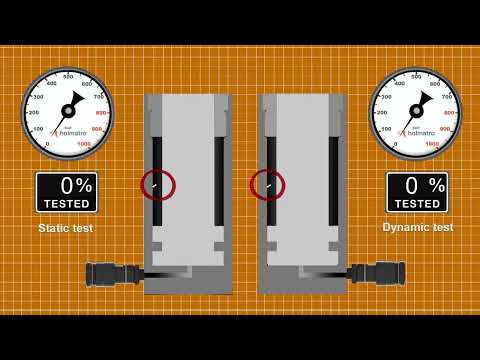
- 3. Dynamic Testing In addition to the periodic inspection, ensure that your hydraulic tools are also periodically dynamically tested. This goes beyond static testing (which is legally required). During a dynamic test, you simulate the tool’s maximum capacity within a controlled environment. The hydraulic tool is tested for (hidden) defects along its entire length or surface, instead of at just three points (as with static testing).
In short, ensure the safest possible conditions when using hydraulic tools. This prevents oil injections or other injuries. This is a responsibility for both employers and employees (the users).