The Team Approach to Road Traffic Accidents
The Team Approach to road traffic accidents has been around for over 20 years. Its goal is to shorten the extrication time of victims by encouraging simultaneous activities (performing multiple tasks simultaneously) and ensuring continuous victim care.
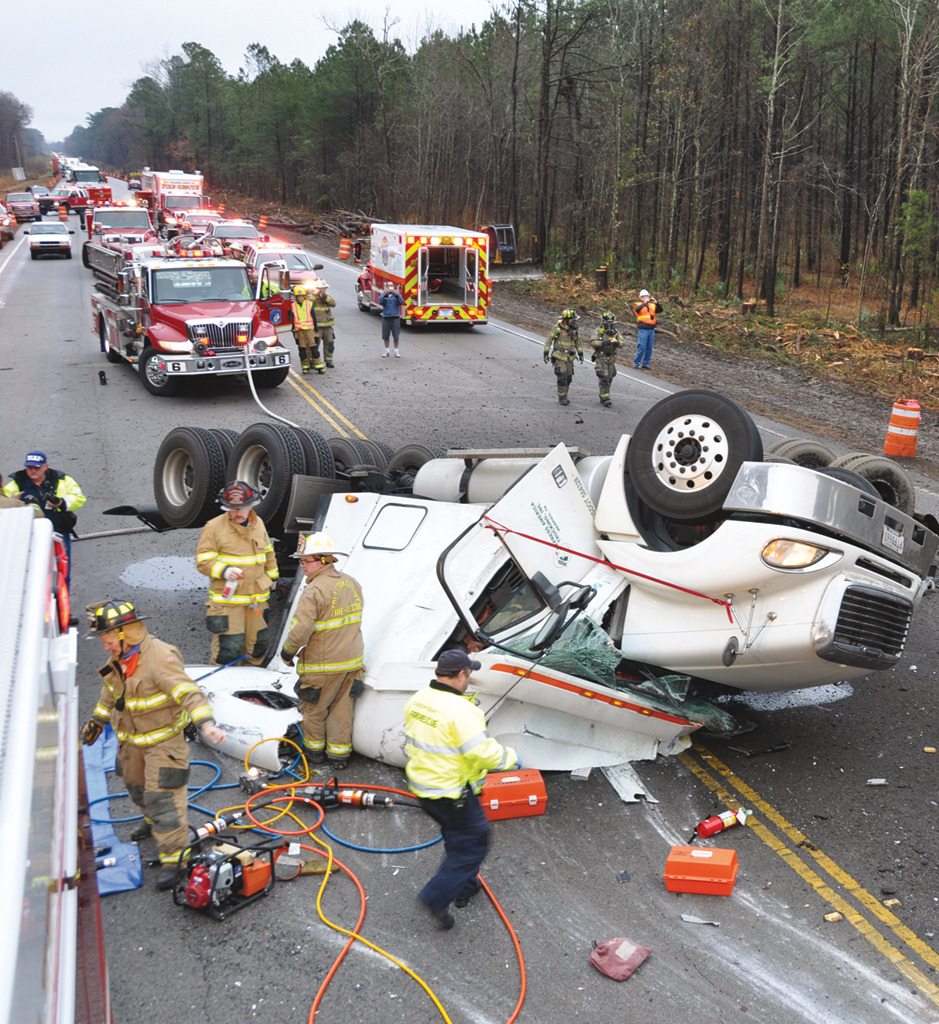
Each team member has a specific role and responsibility during the rescue process. This ensures the team works more efficiently and minimizes the time spent at the accident scene.
The Team-Oriented Approach was developed for teams of 5 to 6 people. Because the composition of emergency services varies significantly worldwide (from just 2 people in some countries to as many as 18 in others), rescuers must adapt the method to their own circumstances, always keeping safety as the top priority.
The Seven Phases
Below is an overview of the seven phases of the Team-Oriented Approach, with a brief explanation of the key points of attention for each phase.
- Safety and Scene Assessment
Making the accident scene safe for both rescuers and victims. Consider closing the road, assessing fire hazards, and assessing traffic or weather risks.
1b. Considering Vehicle Movement
Before stabilization, it may be helpful in some cases to assess whether the vehicle can be moved safely. This can significantly simplify the response or increase the victim’s chances of survival. This step should only be performed when it is responsible (in consultation with medical personnel) and safe to do so, and always with the victim’s well-being as a top priority. - Stabilization and Initial Access
Stabilizing the vehicle to prevent unwanted movement and creating initial access to the victim (e.g., through a door or window) for medical assessment. - Glass Management
Safely removing or checking car windows to prevent injury from broken glass and to increase access. - Creating Space
Increasing the working space around the victim, for example, by opening doors, moving seats, and/or removing vehicle structures. - Full Access
Fully opening the vehicle to allow for safe and direct access to the victim for further care and preparation for extrication. - Immobilization and Extrication
Stabilizing the victim (neck, back, limbs) and performing the actual extrication from the vehicle, coordinated by medical staff. - Evaluation
After deployment and extrication, the deployment is evaluated collectively as a team. This evaluation helps identify lessons learned for future actions.

Safety First
While the order of the phases provides guidance, every situation requires flexibility. The condition of the victim and the circumstances on site ultimately determine how the team executes the steps. Safety is always paramount.
I’m curious: how is this handled in your country or region, and what challenges do you face?
Marinus Verweijen
Holmatro Rescue Consultant